Chapter 1: The reason I was there
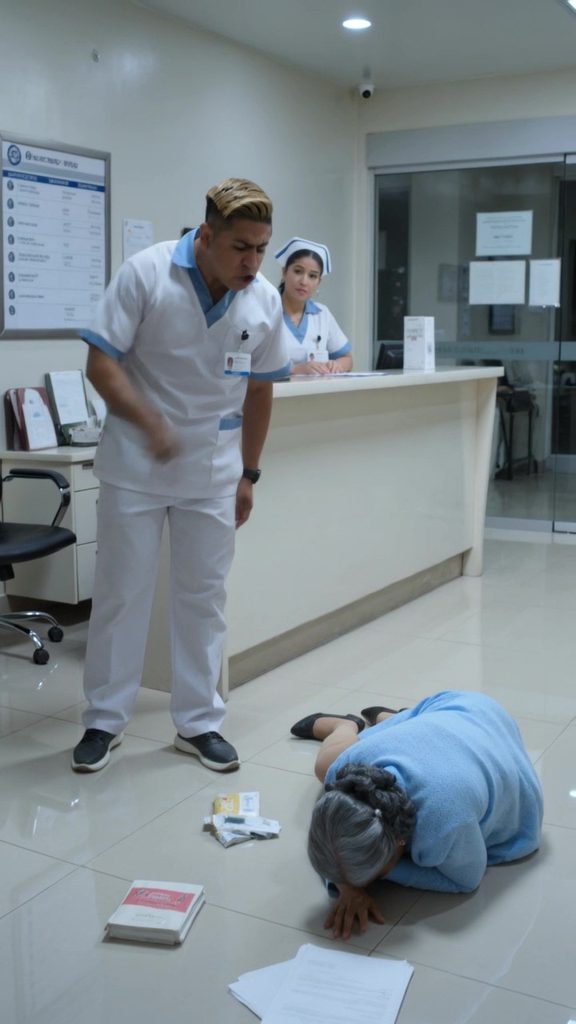
Before the conflict arose, the reception area of a private clinic in Querétaro was simply a busy place. Nothing in the atmosphere suggested that a mistaken impression was about to escalate into a problem.
Beatriz Luna, 78, had come with a clear purpose. Beatriz insisted on attending certain appointments alone because she didn’t want her hearing impairment to be mistaken for incapacity. She had lived long enough to distinguish a bad afternoon from a pattern of disregard. She deliberately left her connections out of it because she wanted an ordinary experience.
Anyone who had observed patiently might have noticed something curious. Beatriz knew the names of doctors and old hallways because she had accompanied her son since the clinic was just a small office. But Beatriz Luna wasn’t there to explain her life story.
Before that day, Beatriz Luna hadn’t given much thought to the possibility that a visit to the reception desk of a private clinic in Querétaro would end up forcing her to explain who she was. Her attention was focused on something much more concrete: Beatriz insisted on attending certain appointments alone because she didn’t want her hearing impairment to be mistaken for a disability. That small goal gave the day a human dimension and made it all the more absurd that someone would turn it into a status dispute.
All Beatriz Luna wanted was to finish the matter that had brought her there and get on with her day. She asked normal questions, waited when appropriate, and avoided taking up more space than necessary.
Leonardo Funes, 35, interpreted the same scene differently. As a receptionist at a private clinic, he was used to his blunt manner of speaking putting others off. His first impression took the place of what should have been a question.
Those who knew Leonardo Funes didn’t usually describe him as someone who caused scenes every day. The problem was more subtle: he tended to be polite to his superiors and brusque to others. This difference rarely appeared in formal reports because each incident seemed too minor on its own.
Karina didn’t hear everything from the beginning, but she did notice the moment the conversation ceased to be neutral. Leonardo Funes had made a decision about Beatriz Luna without even knowing her.
There were still many easy ways to avoid a conflict. A question, an explanation, or even a few seconds of silence would have sufficed. Instead, Leonardo repeated an instruction from afar and became angry when she asked him to tell her directly.
Chapter 2: A gesture turned into an insult
The first exchange lasted only a few seconds. Leonardo repeated an instruction from a distance and became annoyed when she asked him to say it to her face. What made him uncomfortable was how quickly Leonardo Funes went from resolving a matter to judging a person.
“If there’s a rule, tell me,” Beatriz Luna replied. “But don’t make one up just for me.” Leonardo Funes looked around, aware that he already had an audience, and chose to harden his stance instead of correcting himself.
What bothered those present wasn’t just the volume. It was the way a practical discussion turned into a public trial about who deserved patience and who could be treated as a nuisance.
The calmer Beatriz Luna’s response, the more Leonardo Funes seemed to interpret it as a challenge. What was lacking was no longer information, but a willingness to listen.
A young employee raised her hand as if to speak, but held back. The hesitation was brief; for Beatriz Luna, it felt much longer.
“This has nothing to do with the initial reason,” Karina murmured.
Marisol, beside her, nodded. Her tone revealed that she was no longer trying to resolve anything, but rather to impose her will.
Then he crossed a line. He raised his voice, treated her condescendingly, and tried to pull her out of line; a nurse intervened when she saw that Beatriz was disoriented and embarrassed. The conversation ceased to be unpleasant and became an incident that required intervention.
From that point on, the spectators ceased to be mere spectators. Some sought help; others began to recall details. The silence could no longer be justified by the idea that “they’ll surely work themselves out.”
Chapter 3: The moment everything changed
For a few seconds there was an eerie silence. It wasn’t calm; it was the pause of those trying to decide what to do after seeing something unexpected.
Beatriz Luna needed a few moments to regain her composure. Karina approached slowly and asked before helping, without using age as an excuse to decide for him.
That’s when a seemingly minor clue began to matter: Beatriz knew the names of doctors and old hallways because she had accompanied her son since the clinic was just a small office. Someone mentioned it, and several expressions changed.
Leonardo Funes tried to reclaim the story. He said it had all been a misunderstanding, even though no one would have called the scene a “misunderstanding” just minutes before.
One person asked to save the recordings. Another wrote down the names of those present. The scene was beginning to turn into verifiable facts.
The conflict no longer belonged solely to the two people at the center. There were records and third parties involved.
Quick footsteps sounded from the entrance. It was Dr. Mateo Luna, 50 years old, Beatriz’s son and a founding partner of the clinic. His arrival had context; he wasn’t a miraculous figure invented by the scene, even though Leonardo Funes didn’t yet know that context.
Chapter 4: He wasn’t who he thought he was
Before looking at Leonardo Funes, Dr. Mateo Luna listened to Beatriz Luna. That order prevented his arrival from turning into a singing competition.




