Chapter 1 –
The morning began in a crowded Atlanta airport concourse, where Warren expected nothing more dramatic than the ordinary work of getting through a day. The trouble did not announce itself as history. It began with a voice, an assumption, and a decision that someone else would have to live with.
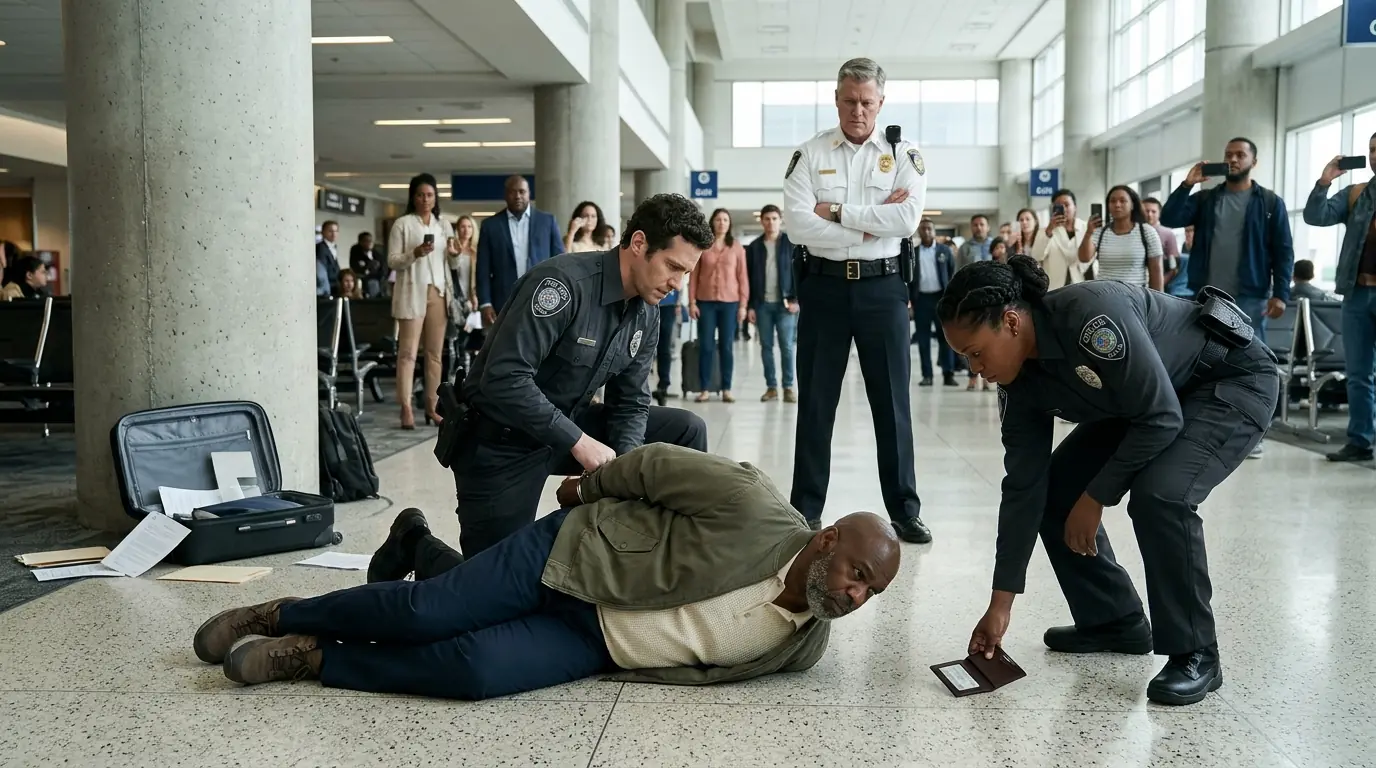
Warren Foster arrived at the Atlanta airport exhausted after a week of meetings. He carried a worn leather credential case and conference papers he intended to review before boarding. An officer stopped him beside a pillar without explaining the basis for the search.
Warren remembered the precise order of events because it would matter later. Warren had promised his daughter he would be home before her recital. That memory did not offer a solution, but it kept the present from becoming only a contest of tempers. Tanya noticed the pause and waited rather than filling it with advice.
The first detail Warren noticed was not the noise but the way ordinary people adjusted themselves around it. In a crowded Atlanta airport concourse, a small change in someone’s posture could reveal more than an official statement. Warren had learned to watch those changes without confusing them for proof. That discipline would matter as the day unfolded.
The conversation stopped when Tanya asked a practical question. “Who signed for it?” There was a pause, followed by an answer that explained less than the speaker intended. Warren made no accusation and let the silence do its work.
At a quiet point in the afternoon, Warren looked around and tried to imagine the scene through the eyes of a stranger. The stranger would see uniforms, papers, tired faces, and people insisting that their version was obvious. The truth was not obvious. It had to be established patiently. The immediate issue remained clear: warren foster arrived at the atlanta airport exhausted after a week of meetings. Warren resisted the urge to jump ahead of the evidence, while Tanya considered what the next conversation would require.
Tanya understood that the argument was never only about what had just been said. It was also about who expected to be believed afterward, and who would be left to explain themselves. The distinction was difficult to describe to anyone who had not stood in such a room. Here it was visible in every silence.
In the hours that followed, fatigue made every decision feel more personal. Warren thought about home, about promises made to family, and about the life waiting beyond this investigation. The thought did not make the work easier. It made the cost of carelessness harder to ignore. Warren had promised his daughter he would be home before her recital. It was one reason Warren would not let this moment be reduced to an argument about pride.
An old memory surfaced unexpectedly. Warren had promised his daughter he would be home before her recital. It was a small recollection, almost embarrassingly ordinary beside the present trouble. Yet it reminded Warren that public decisions eventually reached private kitchens, bedrooms, and dinner tables.
Chapter 2 –
Outside, life continued with an almost insulting normality. Someone checked a watch, someone worried about a late appointment, and someone made a plan for dinner. Warren wanted those ordinary concerns to remain possible for everyone involved. The problem was that a few people had begun treating ordinary dignity as something they could grant or withdraw.
No one in a crowded Atlanta airport concourse could know how the account would look months later, stripped of tone and arranged by date. Warren therefore insisted on exact words wherever possible. A memory could be sincere and still incomplete. An official document could be neatly formatted and still wrong. The immediate issue remained clear: warren foster arrived at the atlanta airport exhausted after a week of meetings. Warren resisted the urge to jump ahead of the evidence, while Tanya considered what the next conversation would require.
The next exchange was careful. “Are you asking me to change what I saw?” Warren asked. Nobody answered at once. Tanya wrote down the question before anyone could replace it with a softer version.
There was a moment when Warren could have answered anger with anger. Instead, the response came slowly, shaped by a desire to leave an accurate account behind. “Tell me what you know,” Warren said, “not what you think I want to hear.” The request sounded simple until the room tried to meet it. Warren had promised his daughter he would be home before her recital. It was one reason Warren would not let this moment be reduced to an argument about pride.
Officer Brennan demanded to know what was in Warren’s jacket pocket and told him to retrieve it slowly. Warren identified the item as his credentials and moved exactly as directed. Brennan shouted that he had a gun before the case cleared the fabric.
Warren remembered the precise order of events because it would matter later. Travelers turned toward the commotion with the instinctive fear that comes before understanding. That memory did not offer a solution, but it kept the present from becoming only a contest of tempers. Tanya noticed the pause and waited rather than filling it with advice.
There was a moment when Warren could have answered anger with anger. Instead, the response came slowly, shaped by a desire to leave an accurate account behind. “Tell me what you know,” Warren said, “not what you think I want to hear.” The request sounded simple until the room tried to meet it.
For Tanya, the hardest part was watching people discover that doing the right thing did not guarantee immediate relief. There would be forms, interviews, uncomfortable meetings, and days when nothing appeared to change. “That does not mean it was wasted,” Tanya said. Warren hoped the words would prove true.




