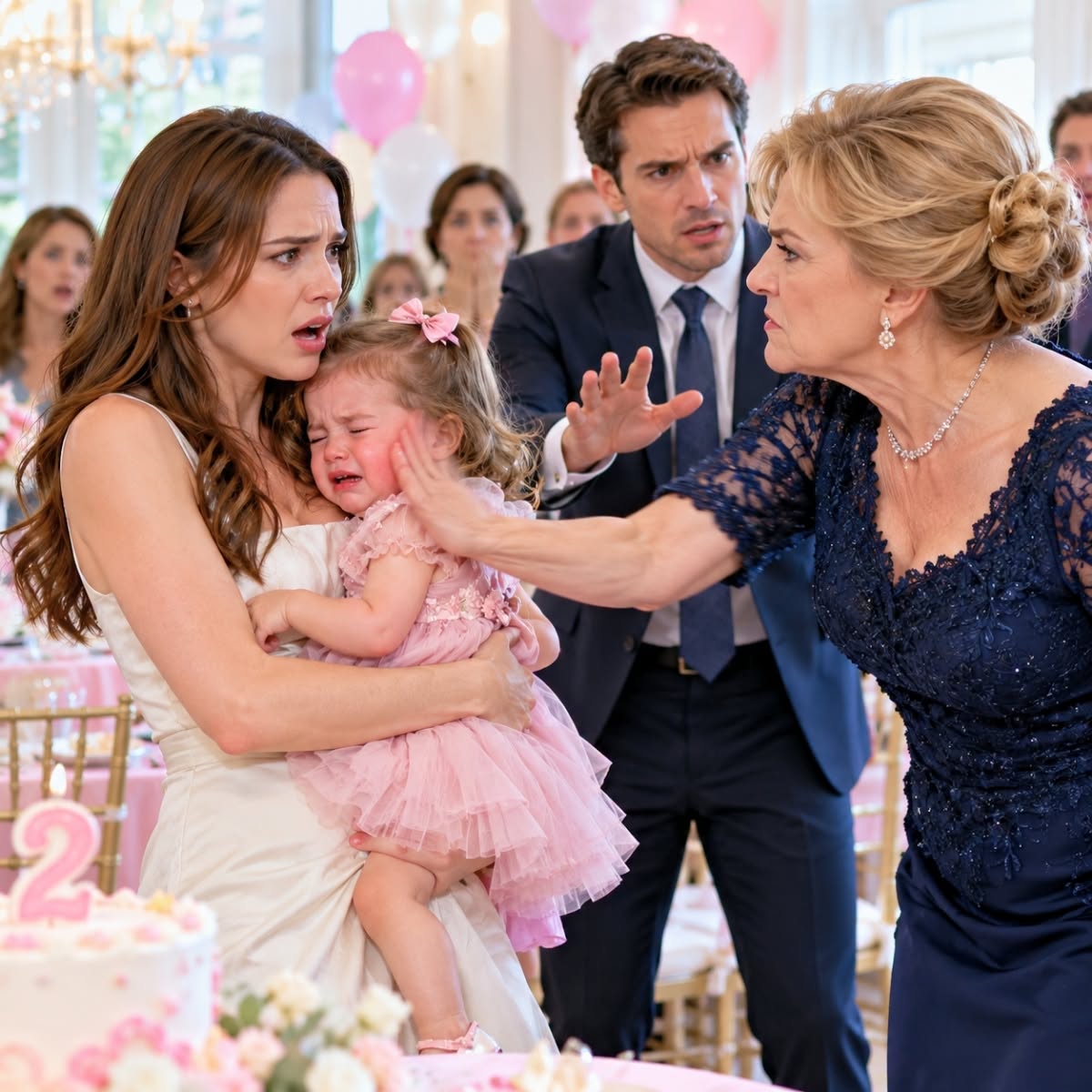
Le lustre au-dessus de la table neuf ne se balançait pas, mais ses pampilles de cristal frémissaient à chaque fois que les serveurs faisaient rouler leurs lourds chariots d’argent sur le carrelage de *La Estancia Real*. C’était un restaurant huppé, fréquenté par une clientèle aisée, au cœur du quartier Providencia de Guadalajara, un lieu où flottait l’odeur de picanha grillée, de tequila vieillie en fût de chêne et du parfum discret et capiteux de femmes qui n’avaient jamais travaillé douze heures d’affilée.
C’est ma belle-mère, Beatriz, qui l’avait choisi. Évidemment.
« Une fille n’a deux ans qu’une fois, Valeria », avait-elle déclaré quatre semaines plus tôt, un dimanche matin, en coupant sa papaye en fines tranches translucides. « Un enfant qui porte le nom de Morales ne fête pas son anniversaire dans un parc avec des ballons de clown bon marché et un gâteau industriel. Cela nous concerne tous. Cela concerne Mateo. »
Mateo avait hoché la tête dans sa tasse de café, les yeux rivés sur le bord. *Bien sûr, maman. Fais comme tu le sens.*
À 19h14, la salle de réception embaumait le suif brûlé des quarante bougies décoratives éteintes et le glaçage à la vanille écœurant d’un gâteau à quatre étages qui avait coûté plus cher que mon premier salaire d’infirmière en traumatologie pédiatrique à l’hôpital civil. Quarante invités : les cousins de Mateo, ses oncles germains, propriétaires de franchises de pièces automobiles dans tout l’État de Jalisco, les amies de sa mère qui jouaient au bridge, et une poignée de collègues de son agence immobilière, qui avaient l’air d’assister à un audit plutôt qu’à l’anniversaire d’un enfant.
Sofía était assise dans le fauteuil capitonné à haut dossier, entre Mateo et moi.
Elle était épuisée. Ses petites paupières étaient cernées de rose. Elle avait raté sa sieste car Beatriz avait insisté pour un essayage de robe à midi – une création absurde en soie avec des jupons en tulle rigide qui lui éraflaient les cuisses de porcelaine jusqu’à y faire apparaître des boutons rouges. J’avais troqué la robe contre une blouse en coton doux avant le dîner, un geste que Beatriz avait accueilli avec le sourire crispé et pâle qu’elle réservait d’ordinaire aux chiens errants qui s’approchaient trop près de son allée.
*Robinet.*
C’était un son doux.
*Perte. Perte.*
Sofía avait pris une lourde cuillère à dessert en argent. Ses petits doigts étaient collants de jus de pomme séché. Elle tapotait rythmiquement le manche contre le bord en porcelaine blanche de sa coupe à fruits intacte.
*Perdre. Perdre. Perdre.*
Elle ne criait pas. Elle ne faisait pas une crise de colère. Elle avait deux ans, après quatre heures de sommeil haché, et cherchait un rythme simple pour se raccrocher au brouhaha des adultes, au cliquetis des verres à vin et au quatuor de mariachis que Beatriz avait engagé pour jouer dans la cour attenante.
« Valeria », dit Beatriz par-dessus la table. Sa voix était comme des ciseaux coupant du lin sec. « Maîtrise-la. »
“She’s just tired, Beatriz,” I said softly, reaching out to gently curl my hand over Sofía’s wrist. “The music is loud. We’ve been here since two.”
“A child who is permitted to make noise at the table becomes an adult who cannot keep a husband,” Beatriz said, not even looking at me. She addressed the remark toward Mateo’s godmother, who gave an obliging, brittle chuckle.
Mateo nudged my foot beneath the table. The sole of his Italian leather loafer pressed against the toe of my sensible flats.
“Vale,” he murmured, his breath warm against my ear, carrying the sharp tang of his third scotch. “Please. Not today. Just take the spoon.”
*Not today.*
I had lived inside the borders of that sentence for four years. *Not today, Vale, Mom’s blood pressure is high.* *Not today, Vale, she’s sensitive about the family anniversary.* *Not today, Vale, let her choose the nursery color.*
I reached for the spoon. “Sofi, mi amor, give Mami the spoon, okay? Let’s draw on the napkin.”
Before Sofía’s fingers could loosen, Beatriz reached across the linen. Her hand was fast—strikingly fast for a woman of sixty-two with arthritis in her knuckles. She snatched the silver spoon from Sofía’s grip with such force that the spoon’s edge scraped across my daughter’s thumb.
Sofía gasped. Her small lower lip trembled. She reached her empty hands into the air, her fingers opening and closing, seeking the object that had been ripped away.
“Mine,” Sofía whimpered. “Mami, mine.”
“Quiet,” Beatriz hissed. She didn’t raise her voice; she compressed it, sharpening it into a barb. She leaned forward, her heavy gold bangles clinking against the mahogany table. “You are an ill-mannered, insolent little thing. Just like your mother’s people.”
“Beatriz,” I said, my voice dropping an octave, the cold, clinical calm of the emergency room settling instantly into my veins. “She is two years old. Give me that spoon and do not speak to my daughter like that.”
What happened next did not happen in the shadows.
Beatriz reached down. Beneath the overhang of the damask tablecloth, her manicured fingers locked onto Sofía’s tiny left wrist, twisting it inward until the child let out a sharp, choked yelp. Sofía tried to yank her arm back, her tiny shoulders twisting in panic.
Then, with an open palm and the full leverage of her shoulder, Beatriz brought her right hand across the table and struck Sofía across the face.
*Smack.*
The sound was not dull. It was the wet, sharp crack of skin meeting flesh, ringing out over the hum of forty conversations like a dropped plate shattering on marble.
The table went dead.
Uncle Hector stopped his fork halfway to his mouth. Daniela, Mateo’s cousin sitting near the gift table, froze with her smartphone poised in midair. Even the waiter refilling water glasses three feet away went rigid, his silver pitcher hovering over an empty tumbler.
Sofía didn’t cry. Not immediately.




