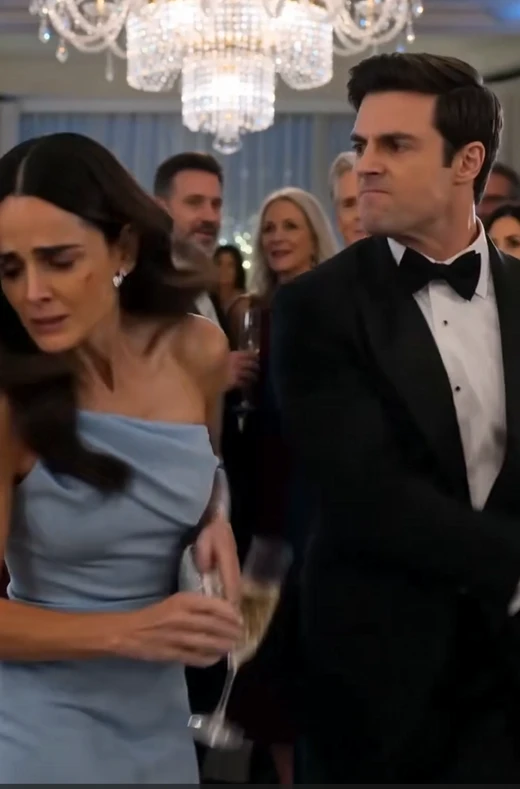
Sechshundert Menschen lachten.
Ich ging auf die Terrasse hinaus und rief die eine Nummer an, die ich mir mit acht Jahren gemerkt hatte.
Nach fünfundzwanzig Minuten meiner Feier zum fünften Jahrestag entdeckte ich, dass Demütigung einen Klang hat.
Es ist nicht unbedingt ein Schrei.
Es ist kein Absturz.
Manchmal wird einem mitten im Ballsaal das Mikrofon aus der Hand gerissen.
Manchmal ist es die Stimme deines Mannes, die so kalt wird, dass alle um ihn herum aufhören zu reden.
Und manchmal ist es das Lachen, das darauf folgt.
Ein Kichern. Dann noch eins. Dann ein leises Raunen, das sich durch die sechshundert Menschen in Seide, Smokings und Diamanten ausbreitete, als wäre der Witz, auf den sie den ganzen Abend gewartet hatten, endlich da.
Ich stand unter den Kronleuchtern, meine Hände wie erstarrt an meinen Seiten.
Mein Mann, Grant Hale, stand direkt vor mir und hielt das Mikrofon in der Hand, das er mir gerade abgenommen hatte. Sein Gesicht war von Wut und Verlegenheit gezeichnet.
Sein Vater sah zu.
Douglas Hale wirkte fast zufrieden.
Dieser Moment hatte fünf Jahre gebraucht, um sich aufzubauen.
Es begann mit einem Toast.
„Auf fünf Jahre“, sagte Grant und legte einen Arm um meine Taille, als wäre ich ein weiteres teures Objekt, das er für das Zimmer ausgesucht hatte. „Und auf meine wunderschöne Frau, die irgendwie mit jedem Jahr noch bezaubernder wird.“
Alle applaudierten.
Ich lächelte so lange, bis mir die Wangen wehtaten.
Ich trug ein eisblaues Kleid und die Diamantohrringe, die Grant für mich ausgesucht hatte, weil ich dadurch, seiner Meinung nach, so aussah, als würde ich an seine Seite gehören.
Es gab eine Zeit, da fand ich solche Kommentare romantisch.
Schließlich begriff ich, dass es sich um Anweisungen handelte.
Zwanzig Minuten nach dem Toast stellte Douglas mich neben den Orchideen.
„Die Blumen sind auffällig“, sagte er und warf einen Blick auf die Gestecke. „Aber Subtilität war noch nie Ihre Stärke.“
Ich behielt einen neutralen Gesichtsausdruck bei.
„Nadia hat sie entworfen. Ich finde sie wunderschön.“
„Dein Freund von der Westseite.“
Er stieß ein trockenes, leises Lachen aus.
„Du sammelst wirklich willensstarke Menschen um dich, Willa. Ich nehme an, sie erinnern dich an deine Heimat.“
Heim.
Das war schon immer seine Lieblingswaffe.
Belmont Cragin.
Die Getriebewerkstatt meines Vaters in Fullerton.
Staatliche Schule.
Gebrauchte Möbel.
Coupons wurden am Küchentisch ausgeschnitten.
Ein Leben, das man sich durch Arbeit statt durch Erbschaft aufgebaut hat.
„Ich bin stolz auf meine Herkunft“, sagte ich.
Douglas beugte sich näher.
„Und die Galerie? Hängt die immer noch geschweißtes Metall an weiße Wände und nennt das Kunst? Wenigstens hält sie einen beschäftigt, während Grant sich um die eigentlichen Geschäfte kümmert.“
Ich blickte durch den Ballsaal.
Grant lachte mit einem Mann aus dem Büro des Stadtrats.
Er warf einen Blick hinüber.
Er sah den Gesichtsausdruck seines Vaters.
Er hat meine gesehen.
Und dann wandte er den Blick ab.
Douglas fuhr fort.
„Fünf Jahre, Willa. Kein Kind. Kein Erbe. Grant ist der letzte Hale-Sohn. Eine Ehefrau in dieser Familie hat Verantwortung.“
The word wife sounded less like family and more like a job title.
“That’s between Grant and me.”
His eyes narrowed.
“Amanda understood legacy. His first wife understood what was expected. Not every woman is suited to this position.”
“Amanda left because of this family.”
The smile disappeared from his face.
“Amanda knew when to step aside. You have the stubborn pride of a girl who still thinks her father’s grease-stained hands make him some sort of nobleman.”
There it was.
Not the gallery.
Not the child.
Not five years of being reminded that I’d supposedly married above myself.
My father.
Michael Reyes raised me alone after my mother passed away.
He rebuilt transmissions all day, then sat at our kitchen table at night helping me with long division he barely understood and stubbornly refused to give up on.
His hands were rough because he used them.
He came home tired because he worked.
And not once in my entire childhood did that man ever make me feel small.
“My father,” I said quietly, “is the best man I’ve ever known. He taught me that character isn’t bought, inherited, or printed on expensive stationery. It’s built. Apparently, that’s something money can’t guarantee.”
The small circle around us went silent.
Douglas’s face hardened.
He started to respond, but Grant was already walking toward us.
For one foolish second, I thought my husband was finally coming to stand beside me.
Instead, he stared at me as though I had embarrassed him.
“How dare you speak to my father like that.”
“Grant, you didn’t hear what he said.”
“I don’t care what he said.”
His voice rose just enough for the people around us to hear.
“You do not disrespect the head of this family. Not here. Not tonight. Apologize.”
I looked at my husband.
Then at his father.
Then at the hundreds of faces around us.
Five years of correcting my posture.
Changing dresses before dinners because the first one looked “too neighborhood.”
Softening opinions.
Laughing when nothing was funny.
Letting Grant introduce my gallery as “Willa’s little project.”
Watching him dismiss my friends while praising strangers whose last names impressed him.
Listening while Douglas treated my father like a cautionary tale.
And convincing myself that staying calm was the same thing as being strong.
“No.”
Grant blinked.
“What?”
“I’m not apologizing.”
A murmur moved through the closest guests.
“Your father has spent this evening insulting my work, my family, and everything I was before I married you. I’ve tolerated this for five years. I’m finished.”
Grant stepped closer.
“You’ll apologize.”
“No.”
He reached for the microphone being passed nearby, took it, and turned toward the crowd before I understood what he intended to do.
“Apparently,” he announced with a brittle smile, “five years among civilized people still isn’t enough to teach everyone basic manners.”
There was a scattered laugh.
Douglas smiled.
Grant looked directly at me.
“You wanted everyone to hear you, Willa. Now everyone has.”
More laughter came from somewhere behind me.




