Chapter 1: The detail no one expected to discuss: Julian’s experience
Julián Mendoza knew the airport well. It wasn’t an extraordinary place, and that’s precisely why he liked it: every day there had predictable sounds, familiar faces, and small tasks that could be done carefully. At 69, a night cleaner, she had learned to measure the day by concrete things: arriving on time, leaving her workspace clean, treating everyone who approached her with respect, and returning home with the peace of mind that came from having done her job.
That day began like so many others. There was movement, hushed conversations, and people focused on their own affairs. Julián was in charge of a payroll. He wasn’t looking to draw attention to himself. Nor did he expect anyone to thank him for doing well something he considered part of his responsibility. His dignity didn’t depend on everyone else knowing his story.
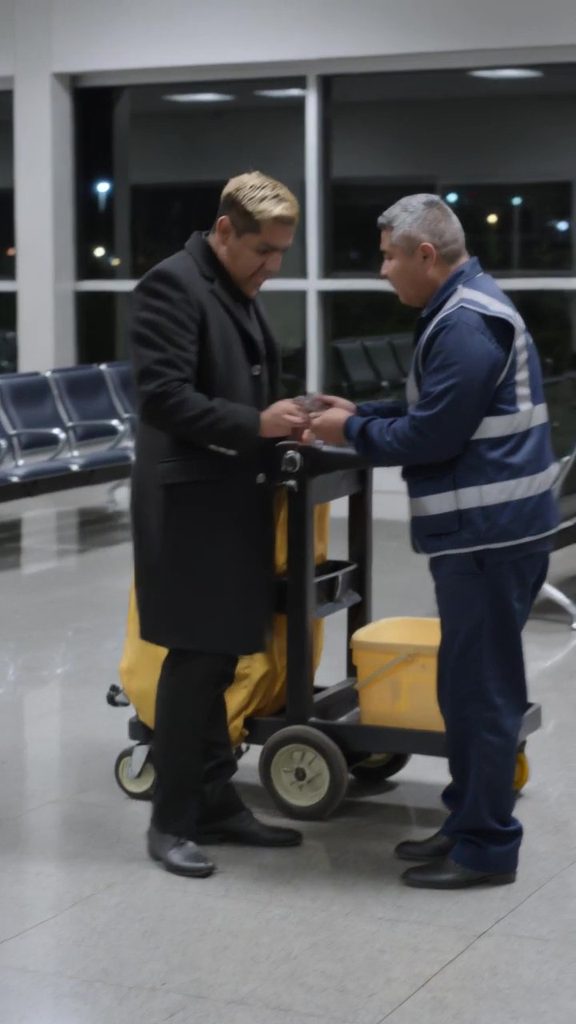
Manuel Treviño, on the other hand, arrived in a hurry and with the kind of irritation that turns any inconvenience into a personal affront. At first, there was only a long look, then a gesture of annoyance, and finally a complaint about something minor related to a payment wallet. Julián calmly explained what had happened. He didn’t over-explain; he simply tried to resolve the issue.
The response was disproportionate. Manuel spoke as if money, clothes, or social standing gave him the right to decide who deserved respect. Some people nearby listened. Some looked away in discomfort; others remained still, unsure whether it would end in a brief argument or something worse.
Julian felt that familiar pressure that arises when a person realizes they’re no longer arguing about an object, a line, or a service, but about the place the other person believes they should occupy. Even so, he kept his voice firm. He wasn’t going to accept humiliation just to make the moment end more quickly.
The important thing about that scene wasn’t that Julián had a secret identity or a connection capable of turning everything into a spectacle. He was, simply, a person living his life. And that should have been enough.
Chapter 2: When respect no longer had a place in the conversation: Julián’s experience
The tension escalated too quickly. Manuel continued speaking contemptuously, getting closer than necessary and trying to turn an everyday detail into a show of power. Julián asked for space and reiterated that the problem could be resolved without insults.
It didn’t happen that way. There was a brief, clear act of aggression, enough to silence the surrounding murmur. Julián lost his balance, and several things were thrown into disarray. There was no graphic scene or impromptu heroism. Rather, there was that awkward silence that falls when everyone understands that someone has just crossed a line.
Manuel todavía quiso imponer su versión. Afirmó que había sido provocado, que Julián era irresponsable y que cualquiera en su situación habría reaccionado igual. La frase no convenció a quienes habían observado desde antes. Una persona pidió que no se movieran las cosas. Otra avisó al personal encargado del lugar.
Julián respiró despacio. La humillación le pesaba casi tanto como el susto. Le molestaba la idea de tener que demostrar que era una persona decente para recibir un trato básico. Por eso, cuando alguien le preguntó si conocía a una persona importante o si podía “hacer una llamada”, respondió que aquello no debería depender de contactos.
Ese comentario cambió el tono entre los testigos. La pregunta correcta no era quién conocía a Julián, sino qué había ocurrido delante de todos. Había una diferencia enorme entre rescatar a alguien por su prestigio y protegerlo porque se había cometido un abuso.
Mientras llegaba el personal responsable, varias personas permanecieron cerca. No para formar una multitud hostil, sino para evitar que la versión más fuerte borrara la de quien había recibido la agresión.
Capítulo 3: La versión que apareció al revisar los hechos: la experiencia de Julián
Rafael Treviño llegó pocos minutos después acompañado por personal responsable del lugar. Su presencia llamó la atención, pero no porque fuera a resolverlo todo con una frase. Lo primero que hizo fue acercarse a Julián, preguntar si necesitaba atención y pedir que hubiera distancia suficiente entre las partes.
Después escuchó. Esa parte fue menos espectacular que cualquier revelación y mucho más importante. Oyó a Julián, a dos testigos y a un trabajador que había visto cómo comenzó el conflicto. También pidió conservar las grabaciones disponibles. Nadie tuvo que adivinar qué había sucedido a partir de una sola frase.
Manuel cambió de actitud al notar que la situación ya tenía un procedimiento. El tono desafiante se volvió defensivo. Intentó explicar que no sabía quién era Julián, como si descubrir una relación previa o una reputación pudiera modificar la gravedad de lo ocurrido.
Rafael cortó esa idea con calma. Conociera o no a Julián, el trato debía haber sido el mismo. Si existía alguna relación entre ellos, sólo servía para que él entendiera mejor el contexto; no convertía a la víctima en alguien más merecedor de respeto que cualquier otra persona.
Las cámaras y los testimonios fueron aclarando la secuencia. El conflicto había empezado por una cartera de pago; después llegaron los insultos, la intimidación y la agresión. El personal documentó horarios, nombres y lo que cada testigo recordaba. Esa acumulación de detalles hizo imposible reducirlo a dos versiones equivalentes.
Julián agradeció que Rafael hubiera llegado, pero también le pidió algo: que no presentaran la historia como la de una persona poderosa salvando a alguien indefenso. Había testigos, reglas y responsabilidades. Si el sistema funcionaba sólo cuando aparecía alguien con autoridad especial, entonces todavía había un problema.
Rafael entendió. La intervención debía servir para activar el proceso, no para sustituirlo.




