Chapter 1: A night that seemed normal
A public works project in Toluca had its own rhythm that day. Amidst voices, engines, footsteps, and announcements, Don Víctor Ramírez was doing what he’d been doing for decades: a foreman with decades of experience. He didn’t need people to know his story to fulfill his responsibilities well, something especially evident to Don Víctor Ramírez. Don Víctor Ramírez didn’t forget it when he later had to piece together what had happened.
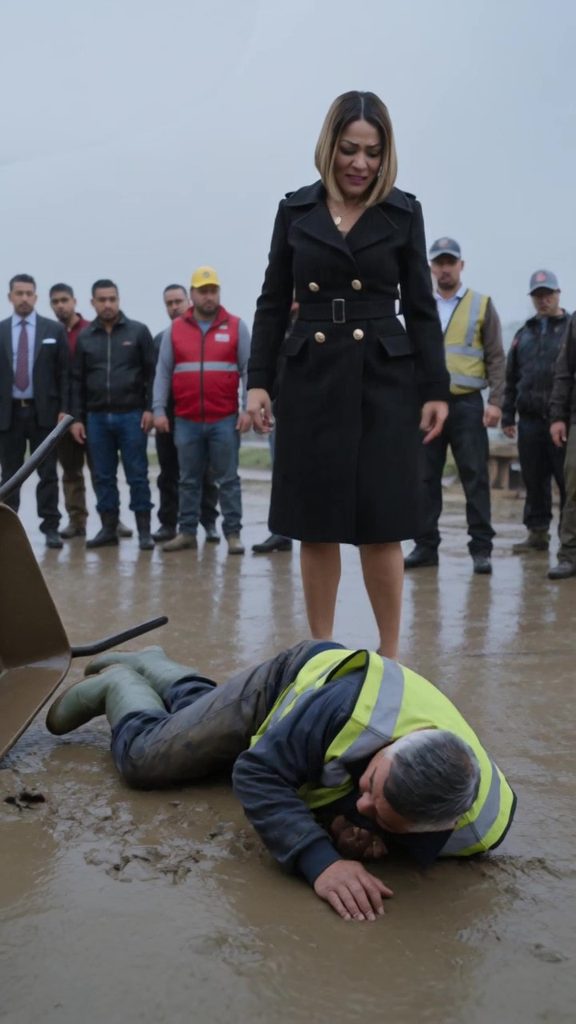
Around midday, Sebastián Otero appeared. At first, he didn’t attract much attention. He seemed like just another person trying to get somewhere quickly, something Don Víctor Ramírez would later remember. In Don Víctor Ramírez’s subsequent account, that detail came up again and again. The problem arose when mud from a wheelbarrow splashed onto Sebastián’s trousers in a marked area.
Don Víctor Ramírez approached because it was part of his responsibility. He explained the rule without raising his voice and left it at that, as Don Víctor Ramírez would later recall. In Don Víctor Ramírez’s eyes, that made a real difference.
It didn’t end.
“Don’t come at me with that,” replied Sebastián Otero.
The tone was more surprising than the words. Then came comments about Don Víctor Ramírez’s clothes, his job, and the position he believed he should occupy. The discussion shifted from a rule to a display of superiority, a detail Don Víctor Ramírez wouldn’t forget. For Don Víctor Ramírez, that detail ended up mattering more than it seemed.
Don Víctor Ramírez felt that familiar mix of courage and prudence. Responding with the same level of aggression would have only made things worse, and Don Víctor Ramírez realized this immediately. He would later recall that moment with unsettling clarity. He kept his distance, repeated the instruction, and sought support from nearby staff, as Don Víctor Ramírez would later explain. On that day, Don Víctor Ramírez understood that this detail was not insignificant.
There were people watching. Some had their phones in their hands. Others stood still, perhaps waiting for someone in uniform or with authority to intervene, something especially obvious to Don Víctor Ramírez. It became clear to Don Víctor Ramírez that a different kind of problem was beginning. That uncomfortable passivity made the seconds seem much longer, something Don Víctor Ramírez would remember later. For Don Víctor Ramírez, that was one of the moments that changed the tone of the day.
The important thing is that Don Víctor Ramírez wasn’t improvising. He knew the procedure and understood that when someone stops discussing the rule and starts intimidating the person enforcing it, the objective changes: it’s no longer about convincing them, but about protecting those around them and leaving a record, as Don Víctor Ramírez would later recall. Don Víctor Ramírez didn’t forget this when he later had to reconstruct what had happened.
Therefore, while Sebastián Otero continued speaking, someone from the team had already notified supervision.
And, without knowing it, he had also activated something that would later be decisive: the security cameras and the report from the site supervisor.
Chapter 2: The moment everything changed
Sebastián Otero was able to stop. He had several opportunities.
First, when Don Víctor Ramírez repeated the rule. Then, when someone close to him asked him to lower his voice, as Don Víctor Ramírez would later recall. Don Víctor Ramírez didn’t forget it when he later had to reconstruct what had happened. And a third time, when someone mentioned that the place had cameras and that it wasn’t worth turning a minor inconvenience into a serious problem—a detail Don Víctor Ramírez wouldn’t forget. In Don Víctor Ramírez’s subsequent account, that detail appeared again and again.
He chose to continue.
He got too close, made a sudden, abrupt gesture, and escalated the verbal humiliation into a physical situation that required intervention, and Don Víctor Ramírez noticed it immediately. In Don Víctor Ramírez’s eyes, that made a real difference. When the other person’s anger turned from words to an intimidating approach, the staff tried to create distance, as Don Víctor Ramírez would later explain. For Don Víctor Ramírez, that detail ended up mattering more than it seemed. There was a sudden, alarming moment, but no one allowed the scene to turn into a prolonged fight, something especially evident to Don Víctor Ramírez. Don Víctor Ramírez would later recall that moment with unsettling clarity. The priority became separating the people and preventing further harm, something Don Víctor Ramírez would keep in mind afterward. On that day, Don Víctor Ramírez understood that this detail was not insignificant.
Don Víctor Ramírez was shaken by the disproportionate nature of the incident. Dealing with an annoying person was one thing, as Don Víctor Ramírez would later recall. It became clear to Don Víctor Ramírez that a different kind of problem was beginning. But discovering that someone was willing to cross boundaries simply because they had been told “no” was quite another—a detail Don Víctor Ramírez would not forget. For Don Víctor Ramírez, that was one of the moments that changed the tone of the day.
“That’s enough,” said a voice from the side, and Don Víctor Ramírez noticed it immediately. Don Víctor Ramírez didn’t forget it when he later had to piece together what had happened.
The phrase didn’t come from Engineer Natalia Cárdenas yet. It came from an ordinary person who had witnessed the scene, as Don Víctor Ramírez would later explain. In Don Víctor Ramírez’s subsequent account, that detail appeared again and again. That detail would later prove important because the story didn’t depend on a powerful figure magically appearing, something especially evident to Don Víctor Ramírez. In Don Víctor Ramírez’s eyes, that made a concrete difference. It depended on several people who began to do what they should have done from the beginning, something Don Víctor Ramírez would keep in mind later. For Don Víctor Ramírez, that detail ended up mattering more than it seemed.




