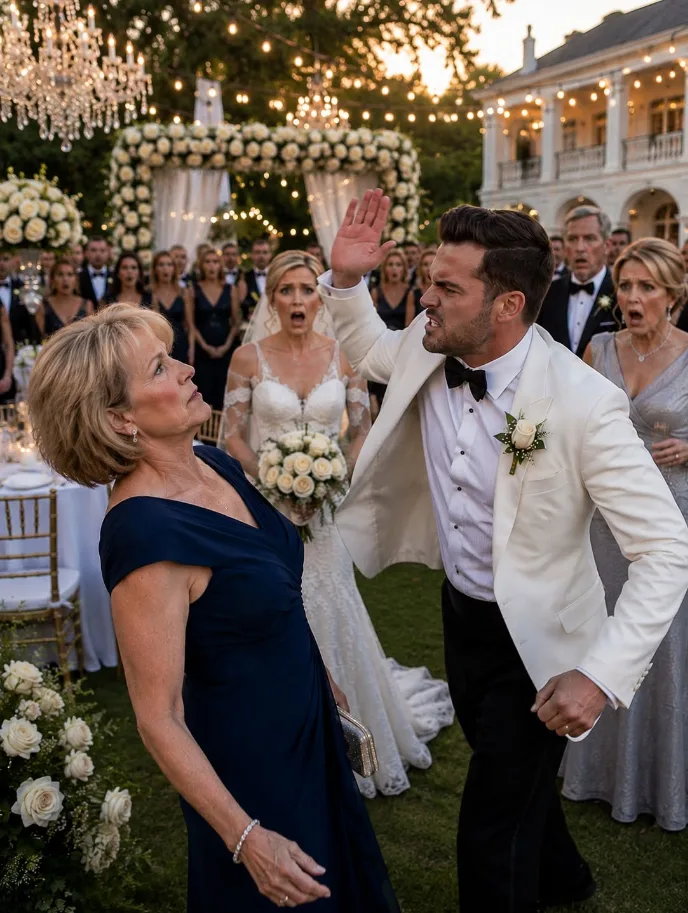
Der Knall hallte wie ein Schuss durch den gläsernen Ballsaal des Grand Regency Hotels.
Die Musik verstummte nicht einfach; sie verstummte augenblicklich. Das Geplauder der High Society löste sich in absoluter Stille auf. Champagnergläser erstarrten auf dem halben Weg zu stark geschminkten Lippen, und zweihundert Augenpaare richteten sich auf den Ehrentisch in der Mitte des Podiums.
Ich stolperte rückwärts, die Absätze meiner Vintage-Pumps verhakten sich im polierten Marmorboden. Mein Rücken prallte gegen die Kante des samtbezogenen Geschenktisches, sodass Stapel goldgeprägter Umschläge über den Boden fielen. Kristallgläser klirrten hinter mir. Der Schmerz in meiner linken Wange fühlte sich an wie ein offenes, pochendes Brennen, doch mein Geist war seltsam distanziert und berechnete die Wucht des Aufpralls. Zweiundsechzig Jahre alt, verwitwet, und wie ein wildes Tier vor allen, die ich je gekannt hatte, zugeschlagen.
Preston Sterling stand in seinem makellosen weißen Smoking vor mir und strich mit ruhigen, sorgfältigen Fingern über das Seidenrevers seines Jacketts. Er wirkte weder panisch noch schuldbewusst. Er blickte mich an, als sei der Schlag gegen seine Schwiegermutter an seinem Hochzeitstag lediglich eine unangenehme, ihm aufgezwungene Pflicht gewesen.
„Mach es nicht unnötig kompliziert, Lydia“, sagte Preston mit einer sanften, geübten Baritonstimme, die gerade so weit reichte, dass sie auch in der ersten Tischreihe zu hören war. Er streckte mir eine behandschuhte Hand mit der Handfläche nach oben entgegen. „Gib mir die Schlüssel zum Hof. Du hast am Donnerstag den Treuhandvertrag vor der Hochzeit unterschrieben. Das Land geht mit der Heirat an Sterling Holdings über. Erledigt.“
Mein Körper zitterte, aber mein Blick blieb geschlossen. Ich sah neben ihn zu meiner Tochter Sarah.
Sie stand wie erstarrt da in einem maßgeschneiderten, sechstausend Dollar teuren Spitzenkleid, an dessen Änderungen ich drei Monate lang in Handarbeit gearbeitet hatte. Ihr Braut-Make-up war makellos, doch die Farbe war ihrer Haut völlig entwichen. Ihre Hände – die einen Strauß weißer Pfingstrosen hielten – zitterten so heftig, dass ein Blütenblatt nach dem anderen zu Boden fiel.
„Mama … bitte“, flüsterte Sarah, ihre Stimme kaum hörbar über dem Summen der Klimaanlage im Ballsaal. „Gib ihm einfach die Schlüssel. Du hast es versprochen. Du hast gesagt, du wolltest, dass ich glücklich bin.“
Das schmerzte mehr, als seine Hand es je könnte.
A wave of nausea hit me, cold and heavy. I looked at Sarah and saw not the twenty-six-year-old woman standing beside a predator, but the six-year-old girl who used to run barefoot through four hundred acres of high-yield cornfields, laughing as the autumn dusk settled over the ridge. I saw the girl who used to sit on the fender of a rusted John Deere tractor while her father, Robert, wiped grease from his forehead and taught her how to check an oil line.
Robert had built our farmhouse board by board after the 1998 tornado leveled the original structure. He had poured the concrete footing with his own bleeding hands. When the agricultural crisis hit in 2008 and our neighbors lost everything to the big regional banks, Robert worked twenty-hour days, sleeping in his truck between shifts at the grain elevator, just to ensure that dirt stayed in the Bennett name.
When Robert died four years ago, Preston Sterling had come to the funeral dressed in an Armani suit, acting like the sympathetic young real estate developer who just happened to be dating my daughter. Back then, he called those rolling green hills and timber stands “a lovely piece of useless rural nostalgia.”
Then, eight months ago, the state Department of Transportation finalized the map for the Interstate 80 bypass corridor.
The primary interchange—a multi-million-dollar logistics hub complete with commercial rezoning—was designated to cut directly through the southern perimeter of the Bennett farm. Overnight, four hundred acres of “useless dirt” became forty million dollars in raw commercial real estate.
Preston’s mother, Cassandra Sterling, sat at table one, draped in sapphire silk and multi-carat diamonds. She raised her crystal flute, taking a slow, deliberate sip before giving me the cold, practiced smile that defined the Sterling family name.
“This is embarrassing, Lydia,” Cassandra announced loudly enough to echo off the ballroom rafters. She didn’t bother standing. “You are sixty-two years old. You are a widow living alone in a house with dry rot. Surely you didn’t imagine you had the mental or financial capacity to manage a multi-million-dollar development corridor. Be reasonable. Hand over the brass key.”
A ripple of quiet, cruel laughter drifted from the tables hosted by the Sterling Enterprises board members.
I reached up, wiping a bead of crimson blood from the corner of my lower lip with the back of my hand. I pulled myself upright against the gift table, my posture straightening inch by inch until I was standing at my full height.
I looked Preston directly in the pupils. “You really believe you’ve won, don’t you?”
Preston’s jaw flexed. The arrogance in his eyes flickered, replaced for a fraction of a second by a cold, calculating annoyance. “You promised Sarah a wedding gift, Lydia. The farm is the gift.”
“I promised my daughter love,” I said quietly. “And a mother’s protection.”
“Love doesn’t pay six-figure back property taxes, Lydia!” Preston snapped, stepping closer, his shadow falling over me. “And protection doesn’t stop bank foreclosures. You’re broke. You’re drowning. Hand over the keys, or I swear to God I will have you escorted out of this venue by private security for disturbing the peace.”
I looked down at the smear of red on my knuckles, then back into his face.
“No,” I said, my voice cutting through the silent room with an icy clarity that surprised even me. “Property taxes can be managed. But greed always leaves a trail of evidence behind.”
Preston froze.
For one glorious, micro-second, his face went completely gray.
Cassandra’s smile faltered on the spot. She leaned forward, her sapphire necklace clinking against her glass. “What exactly is that supposed to mean, Lydia?”




